
There’s a reason fall feels like the season homes start “talking.” The temperature swings, the first real cold mornings, and the shift from air conditioning to heat all put a house through changes that summer never asks of it. Things that were easy to ignore in July have a way of becoming impossible to ignore by November.
Here’s what to actually pay attention to this season for your home maintenance checklist, and how to tell the difference between normal seasonal change and something worth a closer look.
Drafts You Didn’t Notice Before

A window or door that felt perfectly fine all summer can suddenly feel drafty the first time the temperature drops. This usually isn’t a sign that anything got worse overnight, it’s that a small gap or worn seal only becomes noticeable once there’s a real temperature difference to feel it against.
Run your hand around your window and door frames on a cool day. If you feel air movement, it’s worth checking whether it’s a simple weatherstripping fix or a sign of a bigger windows and doors issues.
Cracks That Seem to Widen
Cooling temperatures cause materials to contract, which is why hairline cracks in drywall, trim, or even foundations can look slightly more noticeable in fall than they did in the middle of the summer. Most of the time, this is normal seasonal movement, especially in older homes.
That said, it’s worth keeping an eye on:
- Cracks that grow noticeably from season to season, rather than staying the same size.
- Cracks wider than a quarter-inch, or ones you can see through.
- Diagonal cracks near windows or doors, which can sometimes point to settling rather than simple surface movement.
If a crack looks the same as it did last fall, it’s probably nothing new. If it’s visibly bigger, that’s worth a second look.
Floors and Doors That Suddenly Behave Differently
A door that used to close easily but now sticks, or a floor that creaks in a spot it never used to, is often related to humidity change rather than anything structural. Wood expands and contracts with moisture in the air, and the shift from humid summer air to dry fall air can be enough to change how a door fits its frame or how a floorboard sits.
If it’s a one-season quirk that comes and goes with the weather, it’s usually not urgent. If it's a new problem that didn’t happen last year, or it’s getting worse rather than settling, that’s a better reason to have someone take a look.
Cold Spots That Weren’t There in The Summer
If a particular room or wall suddenly feels colder than the rest of the house once the heat kicks on, it’s often a sign of an insulation gap or airflow issue that the air conditioner may have never revealed. Central air cools a home more evenly than a furnace heats it, so insulation problems tend to show up more clearly in fall and winter than they do in summer.
Musty Smells That Show Up When the Heat Kicks On
If the first time you run your furnace this fall comes with a faint musty or dusty smell, it’s often just dust that settled in the ductwork over the summer burning off, and it usually clears up within an hour or so. But a musty smell that lingers, especially in a basement or crawlspace, can point to moisture that’s been sitting quietly since the last wet season and is only now becoming noticeable as the house closes up and airflow changes.
A smell that fades quickly is typically nothing to worry about. One that sticks around, or comes back every time the heat runs, is worth tracing back to its source.
Gutters and Downspouts Working Overtime
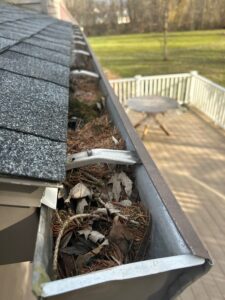
Between falling leaves and the first heavier rains, fall puts gutters through more than any other season. A gutter that handles summer storms fine can back up quickly once it’s full of leaves, and water that overflows near the foundation instead of draining away from it can lead to problems that don’t show up until much later.
Walk the perimeter of your house after a rain and watch where the water actually goes. If it’s pooling near the foundation instead of routing away from your house, that’s worth addressing before the ground freezes and before snow adds even more weight and water to the mix.
Getting Your Heating System Ready Before You Need It
Most people don’t think about their furnace until the first cold night, and by then it’s already working overtime to catch up. A furnace that sat idle all summer can carry dust, a clogged filter, or have other small issues that only become obvious once you actually need consistent heat.
A few things worth checking before the temperature really drops.
- Swap out air filter if it hasn't been changed since spring
- Make sure vents and registers throughout the house aren’t blocked by furniture or rugs
- Listen for anything that sounds of the first few times the system kicks on like rattling, banging, or a burning smell that doesn’t fade after the first run
None of these take long to check, but catching a small issue in October is a very different experience than catching it in the middle of a January cold snap.
When It’s Worth a Second Opinion
Most of what fall reveals is minor seasonal movement, not a real problem. A few signs that it’s worth having someone take a closer look.
- A draft, crack, or cold spot that’s noticeably worse than in previous years
- Anything paired with a musty smell, visible moisture, or discoloration
- A sticking door or window that doesn’t resolve once the humidity evens out
- Multiple small issues showing up in the same area of the house, which can sometimes point to a shared underlying cause
A Quick Fall Walk-Through Worth Doing
A lot of what fall reveals is easiest to catch with one deliberate walk around the house, rather than waiting to notice things one at a time over the next few months. Set aside 20 minutes on a cool day and check:
- Every window and door for drafts, using your hand or a lit candle to spot air movement
- The attic or crawlspace for any signs of moisture, staining, or pest activity that summer heat might have masked
- Gutters and downspouts, making sure they’re clear and directing water away from the foundation
- The exterior caulking around windows, doors, and where siding meets trim, since gaps here let both air and water in
- Any rooms that feel noticeably colder or warmer than the rest of the house last winter, to see if the issue is still there
Most of what you find will be minor and easy to note for later. But catching it now, while it’s still convenient to address, beats discovering it mid-winter when it’s harder to fix and more expensive to ignore.
The Bottom Line
Fall doesn’t usually create new problems in a home as much as it makes existing ones easier to notice. That's actually useful information, not something to dread. It’s a natural checkpoint to walk through your home, pay attention to what’s changed and decide what’s worth addressing now versus what can be simply watched.
If something you’ve noticed this fall has you wondering whether it’s a normal seasonal change or something more, we're happy to take a look and help you figure out which one it is.
Quality Homes of Rochester: Remodeling You Can Rely On
At Quality Homes of Rochester, we specialize in home remodeling that fits your lifestyle. Our team is here to guide you through every step, making the process smooth and stress-free. Call or contact us today, we’re ready to help bring your vision to life.